
Modern industrial facilities are under increasing pressure to improve production efficiency, reduce energy consumption, and maintain reliable equipment operation. Since motors account for a significant share of industrial electricity usage, optimizing motor performance has become a priority for many engineering teams. Selecting the right control technology at the right stage can directly influence system stability, maintenance requirements, and long-term operating costs.
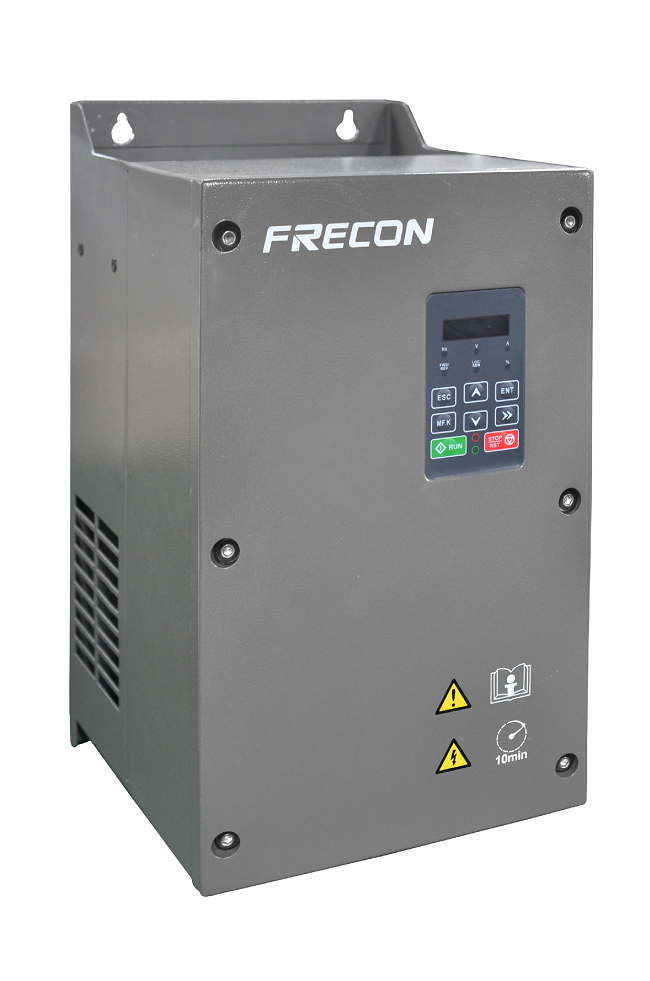
For companies upgrading production lines or designing new automation systems, integrating an industrial inverter into motor-driven equipment is often a strategic decision rather than a simple component replacement. As a professional variable frequency drive manufacturer, FRECON provides inverter solutions designed for industrial automation, energy efficiency, and green new energy applications. Its FR380 Series high-performance vector control inverter demonstrates how advanced control technology can support demanding motor applications.
Recognizing When Motor Control Systems Require Smarter Inverter Technology
Traditional motor control methods can meet basic operating requirements, but they may become limited when production processes require accurate speed adjustment, rapid response, or stable torque output. Engineers usually consider upgrading motor control systems when equipment experiences frequent load changes, inefficient energy usage, or inconsistent operating performance.
Applications such as conveyors, pumps, fans, compressors, and manufacturing machinery often require motors to operate under different speed and load conditions. In these scenarios, fixed-speed operation can lead to unnecessary energy consumption and mechanical stress. An industrial inverter allows operators to regulate motor speed according to actual process requirements, improving operational flexibility.
The decision to integrate inverter technology is also influenced by automation goals. When factories introduce intelligent monitoring, digital control platforms, or advanced production management systems, motor drives need to provide more precise and responsive control capabilities.
How Industrial Inverters Improve Modern Motor Control Systems
An industrial inverter adjusts motor operation by controlling output frequency and voltage, allowing motors to run according to specific application demands. This capability helps manufacturers optimize processes while reducing unnecessary power consumption during partial-load conditions.
For complex industrial environments, vector control technology provides additional advantages compared with basic control methods. Vector control improves torque response and speed regulation by managing motor parameters more precisely. FRECON’s FR380 Series uses sensorless vector control technology, which reduces sensitivity to motor parameter variations and improves field adaptability.
A suitable industrial inverter can also contribute to smoother equipment operation. During startup and acceleration, high torque demand can create stress on mechanical components. The FR380 Series offers high-start torque characteristics, providing 150% start torque at 0.5Hz under sensorless vector control 1 and 150% start torque at 0.25Hz under sensorless vector control 2. This feature helps support applications requiring reliable low-speed performance.
Key Project Situations That Require Inverter Integration
Industrial companies typically evaluate inverter adoption when upgrading equipment, expanding production capacity, or improving energy management. A common situation is replacing outdated drive systems that cannot provide accurate speed control or communication capabilities.
Another important scenario involves machines with variable operating conditions. For example, pumps may require different flow rates throughout the day, while production equipment may need frequent speed adjustments based on product specifications. Integrating an inverter enables these systems to respond more efficiently to changing requirements.
Manufacturers also consider inverter solutions when aiming to reduce maintenance challenges. Excessive mechanical impact during motor startup can accelerate equipment wear. By controlling acceleration and deceleration more smoothly, inverter-based systems can help create more stable operating conditions.
Selecting a Reliable Variable Frequency Drive Manufacturer for Industrial Projects
Choosing the right supplier is an important part of implementing inverter-based solutions. A qualified variable frequency drive manufacturer should provide not only reliable hardware but also technical support, application knowledge, and product compatibility for different industries.
FRECON focuses on industrial automation, energy efficiency, and green energy technologies, offering solutions for various motor-driven applications. Its product portfolio includes electric drive systems, automation products, and inverter technologies designed for industrial requirements.
For engineering teams, product specifications and application suitability are essential evaluation factors. The FR380 Series is designed as a high-performance, high-power-density inverter for applications requiring speed control accuracy, torque response, and low-frequency output performance. These characteristics make it suitable for OEM equipment and industrial systems where consistent motor performance is required.
Planning the Integration Process for Long-Term Performance
Successful inverter integration requires careful consideration of motor specifications, operating conditions, and control requirements. Engineers should evaluate factors such as motor capacity, load characteristics, acceleration requirements, and environmental conditions before selecting equipment.
Communication between mechanical designers, electrical engineers, and automation specialists is also important. A properly configured inverter should work together with sensors, controllers, and other components within the overall motor control systems to achieve stable operation.
Beyond installation, ongoing monitoring and parameter adjustment can help maintain system efficiency. As production demands change, inverter settings may need optimization to ensure motors continue operating effectively.
Building More Efficient Industrial Operations Through Smart Drive Technology
The integration of smart drive technology is becoming increasingly important for manufacturers seeking better control, efficiency, and reliability. An industrial inverter is no longer only a device for changing motor speed; it has become an important element in modern automation strategies.
For businesses planning equipment upgrades or new production systems, working with an experienced variable frequency drive manufacturer can help ensure that inverter solutions match actual operational needs. With technologies such as sensorless vector control and high-start torque capability, FRECON’s FR380 Series provides an example of how advanced inverter solutions can support demanding industrial applications.
By evaluating application requirements early and selecting suitable drive technology, companies can build more responsive and efficient motor control systems that support long-term industrial development.

Oliver Smith is an experienced blogger at Grammar Globe, Oliver Smith, an expert in English grammar and a master of wit, brings language to life with his playful take on puns. Through his works, he weaves humor into the rules of grammar, making learning fun and engaging for readers of all ages. Discover language with a smile!”