
Construction sites place compressed-air lines under a different kind of stress from the controlled environment of a workshop. Hoses may drag across concrete, scrape against steel edges, sit in direct sunlight, or twist around scaffolding while workers reposition pneumatic tools. A nylon hose intended for these conditions must balance pressure capacity with flexibility, surface durability, and resistance to accidental pulling.
Its suitability depends not simply on the polymer itself, but on wall design, installation geometry, fitting retention, and the severity of everyday handling. DEKUMA works in polymer extrusion equipment, a manufacturing field that helps illustrate how tubing dimensions and production consistency influence the performance of finished products.
Understanding Kink Resistance Under Site Conditions
A kink forms when a hose bends beyond its practical limit, causing the cross-section to flatten or collapse. The resulting restriction reduces airflow and can affect the operation of nailers, impact wrenches, spray equipment, and other pneumatic tools. Repeated bending may also concentrate stress at the same location, gradually weakening the wall. Construction applications call for a balance between flexibility and structural recovery, particularly where operators frequently move between work areas.
Bend radius is one of the most useful specification factors. A hose with a relatively small minimum bend radius can navigate around equipment and temporary structures more easily, but flexibility alone does not determine durability. Wall thickness, tube diameter, polymer grade, and temperature all influence how the material behaves during bending. A line that performs well in warm indoor conditions may become stiffer in cold weather, while prolonged heat can change its resistance to deformation.
Routing practices remain important even with a suitably designed hose. Tight loops around tool handles, sharp turns near couplings, and repeated bending at the same point can shorten service life. Where frequent movement is unavoidable, operators should inspect common flex points and avoid pulling the line around corners under tension. A composite tube may use multiple layers to combine different material properties, but its flexibility and kink resistance must be verified in the finished construction rather than assumed from its layered design.
Resisting UV Exposure, Abrasion, and Weather
Outdoor construction introduces environmental stresses that are less common in indoor workshops. Ultraviolet radiation can degrade susceptible polymers through prolonged exposure, causing discolouration, surface embrittlement, or cracking. The rate of deterioration depends on the resin, stabilising additives, exposure intensity, and duration. A hose used intermittently outside may face a different service life from one left on a sunlit roof or scaffold throughout the working day.
Abrasion presents a separate challenge. Concrete surfaces can be rough and gritty, while steel edges may create narrow areas of concentrated wear. Dragging a pressurised line across these surfaces can gradually thin the outer wall, especially near corners, floor openings, and work platforms. Protective sleeves, suitable routing, and abrasion-resistant outer materials can reduce damage, although protection must not interfere with flexibility or conceal deterioration during inspection.
Construction-grade tubing should be assessed against the actual environment rather than selected solely by its nominal working pressure. A nylon hose used around masonry dust, rain, sunlight, and temperature fluctuations may need different environmental resistance from a line intended for a clean workshop floor. Buyers should review the manufacturer’s stated UV and chemical compatibility, temperature range, abrasion performance, and storage guidance.
Preventing Fitting Pull-Out and Handling Damage
Couplings are often among the most vulnerable points in a compressed-air assembly. Workers may pull a line by its hose rather than move the tool or disconnect the supply first. Repeated axial loading can loosen a connection, damage the hose end, or cause the tube to slip from a fitting. The risk increases when the line is kinked near the connector, because bending and pulling forces act on the same short section.
Connection design must match the tubing’s material, dimensions, and pressure requirements. Push-to-connect fittings, threaded adapters, and crimped connections each rely on different retention mechanisms. An incorrectly sized tube can compromise sealing or grip even if the fitting appears compatible. Specifications should identify the approved outside diameter, tolerances, operating pressure, and installation procedure; assembly checks should also look for damaged ends, uneven insertion, and signs of leakage.
Qualification testing should reproduce the stresses likely to occur during use. Pressure cycling evaluates the assembly under repeated pressurisation, while pull-out testing measures resistance to axial loads at the connection. Flexing and abrasion tests can reveal weaknesses that a simple burst test might miss. For a composite tube, testing should also assess whether the layers remain bonded when the assembly is bent, pulled, and exposed to temperature changes.
Matching Extrusion Control to Tubing Requirements
Consistent dimensions are important to hose performance because variations in diameter and wall thickness can affect flexibility, pressure capacity, and fitting compatibility. Extrusion lines must maintain stable material flow and controlled haul-off so that the tube is drawn at a suitable rate without introducing unwanted dimensional variation. Production settings need to suit the polymer, die design, cooling conditions, and target dimensions; equipment speed alone does not establish the quality of the finished tubing.
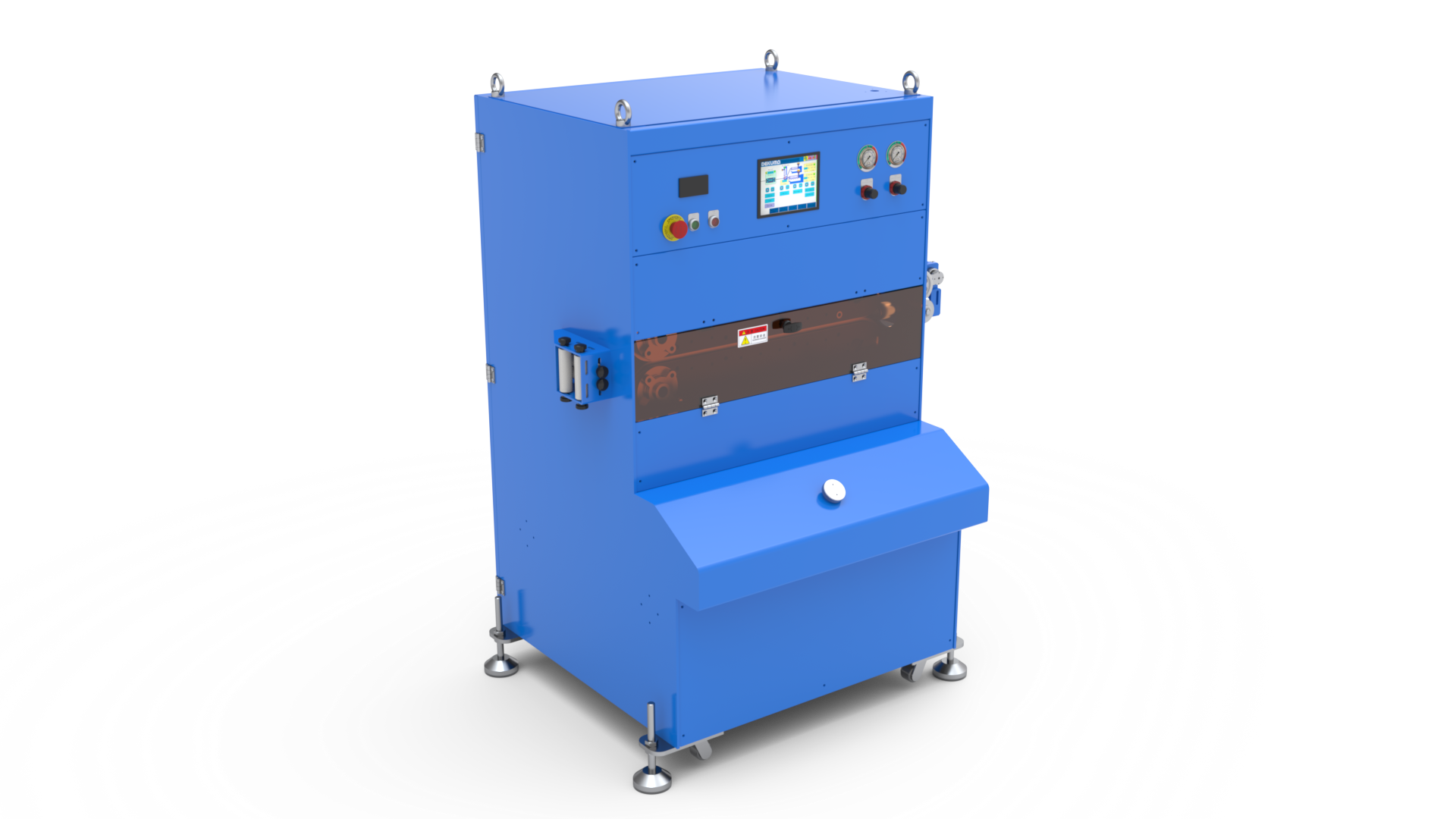
DEKUMA’s Multi-layer Nylon Composite Tube Extrusion Line includes a haul-off unit driven by an Inovance servo system, with a maximum haul-off speed of 80 m/min and pneumatic adjustment for belt clamping. Controlled traction helps manage the movement of tubing through the production line, while adjustable clamping accommodates process requirements.
Conclusion
Construction compressed-air systems demand more than a suitable pressure rating. Resistance to kinking, outdoor ageing, surface wear, and fitting pull-out all contribute to whether a hose remains practical under rough handling. A well-specified nylon hose should be evaluated against the site’s real conditions, including exposure duration, bending frequency, connector loads, and expected maintenance practices.
DEKUMA’s extrusion equipment provides one example of the process controls involved in producing polymer tubing, while dependable field performance ultimately rests on appropriate materials, consistent manufacturing, verified assembly compatibility, and application-specific testing.
