Industrial plants produce exhaust streams loaded with fumes, vapors, dust, and other pollutants. Before that gas can be released or reused, it has to be cleaned, and that is where gas scrubbing equipment comes in. Among the various options available, scrubber separator systems stand out for their simplicity. They combine a scrubber and a separator into a single compact unit that removes gaseous and particulate contaminants in one stage, with no moving parts and no electricity required to run the scrubbing process itself.
If you are new to air pollution control equipment, this guide walks through what these systems are, how they work, where they are used, and why so many plants consider them the go-to choice for fume and particulate removal.
The Basic Idea: Scrubbing and Separating in One Unit
The name tells you most of what you need to know. A scrubber separator system is two pieces of equipment working together as one.
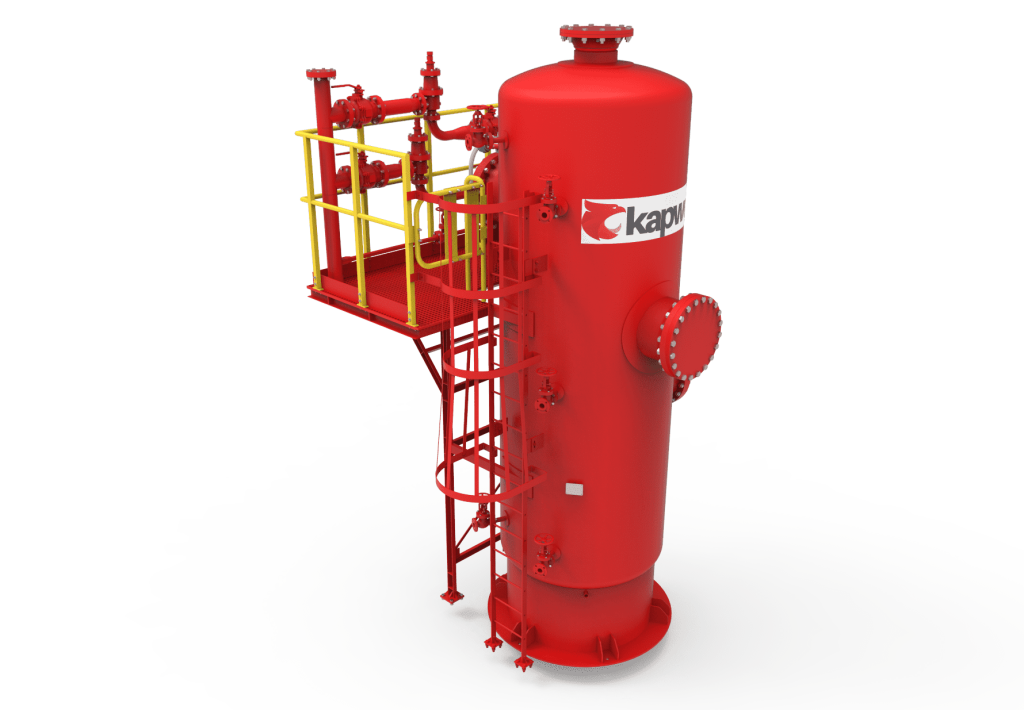
The scrubber portion uses a liquid, almost always water, to capture pollutants from a gas stream. The separator portion then removes the liquid, along with the captured contaminants, from the cleaned gas stream before it is discharged. In many designs these two functions happen in a single vessel, which is why the equipment is often described as a single-stage scrubbing system.
The key word is “single-stage.” The gas enters dirty, gets scrubbed, gets separated, and leaves clean, all in one pass through one piece of equipment. There is no multi-unit train of scrubbers, no separate knockout drum, and no complicated interconnecting piping.
How the Scrubbing Actually Works
Most of these systems use the ejector venturi principle, and understanding it is easier than the name suggests.
Here is the sequence:
- High pressure water (or another scrubbing liquid) is forced through a nozzle, creating a high velocity jet.
- That jet creates a suction effect, which pulls the contaminated gas stream into the scrubber. In many cases the system does not even need a fan to move the gas. The water jet does the work.
- The gas and liquid collide violently in a venturi section. The turbulence breaks the gas into tiny bubbles and droplets, and the scrubbing liquid absorbs the gaseous pollutants while trapping particulates.
- The mixed stream then enters the separator section, where the liquid droplets, now carrying the captured contaminants, are removed from the gas by gravity, cyclonic action, or impact baffles.
- Clean gas exits the top of the separator, and the contaminated liquid drains from the bottom for treatment or disposal.
Because the scrubbing liquid is injected at high velocity, the contact between gas and liquid is intense. That intensity is what allows these systems to achieve removal efficiencies above 99 percent for many contaminants, all in a single pass.
Why No Moving Parts Matters
The most striking feature of this equipment, at least to anyone who has maintained other pollution control devices, is what it does not have. There is no fan, no motor, no pump inside the unit, and no rotating machinery of any kind.
The motive force comes entirely from the pressure of the scrubbing liquid. That design choice has a cascade of practical benefits:
- No electricity required at the scrubber itself. The unit can be installed in locations where running power would be difficult or expensive.
- Very little maintenance. With nothing rotating, nothing to lubricate, and no motor windings to burn out, the maintenance burden is minimal.
- Continuous operation. These systems can run around the clock without the wear issues that plague equipment with moving components.
- Lower total cost. No motor means no motor controls, no electrical hookup, and fewer failure points over the life of the equipment.
For plants that have struggled with fan maintenance on other types of scrubbers, this design is a welcome change.
Where These Systems Get Used
The applications span a wide range of industries. Anywhere a plant needs to remove fumes, vapors, or particulates from a gas stream, a single-stage scrubbing system is a candidate.
Common uses include:
- Acid fume removal. Hydrochloric acid fumes from pickling tanks, chemical processing, and metal treatment operations are a classic application. The water absorbs the acid gas, and the resulting solution can often be recovered or neutralized.
- Ammonia scrubbing. Streams containing ammonia can be scrubbed with water, and in some cases the ammonia can be recovered from the scrubbing liquid for reuse.
- Tank venting and vapor control. Storage tanks that breathe contaminated vapor during filling and emptying can be vented through a scrubber separator system.
- Particulate removal. Dust, mist, and other solid particles are captured by the liquid droplets during the turbulent mixing stage.
- Odor control. Gas streams with odor-causing components can be cleaned before venting.
The ability to handle both gases and particulates in the same unit is one of the reasons these systems are so widely used. Many plants would otherwise need separate equipment for each type of contaminant.
How They Compare to Other Air Pollution Control Equipment
Plants choosing pollution control equipment usually weigh scrubber separator systems against a few alternatives.
Versus baghouses: Fabric filters handle dry particulate well, but they struggle with moist or corrosive gas streams, and the bags require regular replacement. A wet scrubber handles corrosive fumes and sticky particulates without those issues.
Versus electrostatic precipitators: Precipitators can be efficient but are expensive, complex, and require significant electrical power. A jet-type scrubber achieves comparable results for many applications with no electrical requirements at all.
Versus packed tower scrubbers: Packed towers can offer excellent gas absorption but are taller, heavier, and need a separate fan to move gas. The ejector design eliminates the fan and reduces the footprint.
Versus multi-stage scrubbing trains: When extremely high removal efficiencies are needed, multiple scrubbers in series are sometimes specified. But for a large share of applications, a properly designed single-stage system hits the required efficiency on its own, at a fraction of the cost and complexity.
Practical Considerations Before You Specify One
A few points are worth keeping in mind if you are evaluating this type of equipment for your facility:
- Gas volume matters. These systems are available in sizes ranging from small units handling around 25 CFM to large systems handling thousands of CFM. Matching the unit to your actual gas flow is the first step.
- The scrubbing liquid needs managing. The liquid that captures the contaminants becomes a wastewater stream that must be treated, recycled, or disposed of properly.
- Contaminant chemistry drives the design. Water works for many pollutants, but some applications call for chemical additives or a different liquid altogether.
- Materials of construction matter. Corrosive gases demand appropriate materials, whether that is a special alloy, fiberglass, or lined construction.
- Water pressure is the motive force. The plant needs a water supply at sufficient pressure to drive the ejector, so utility conditions should be confirmed early.
The Bottom Line
A scrubber separator system is a study in doing more with less. One compact vessel, one liquid stream, and no moving parts combine to remove fumes, vapors, and particulates at efficiencies above 99 percent for many contaminants. There is no fan to maintain, no electricity to supply, and no complex control system to babysit.
For plant engineers and maintenance teams, that simplicity translates into something concrete: equipment that runs continuously, costs little to maintain, and quietly handles a job that would otherwise demand a much more complicated installation. If your facility is evaluating options for gas cleaning, single-stage scrubbing deserves a spot on the shortlist. It is one of the most dependable workhorses in industrial air pollution control, and one of the easiest to live with once it is installed.