
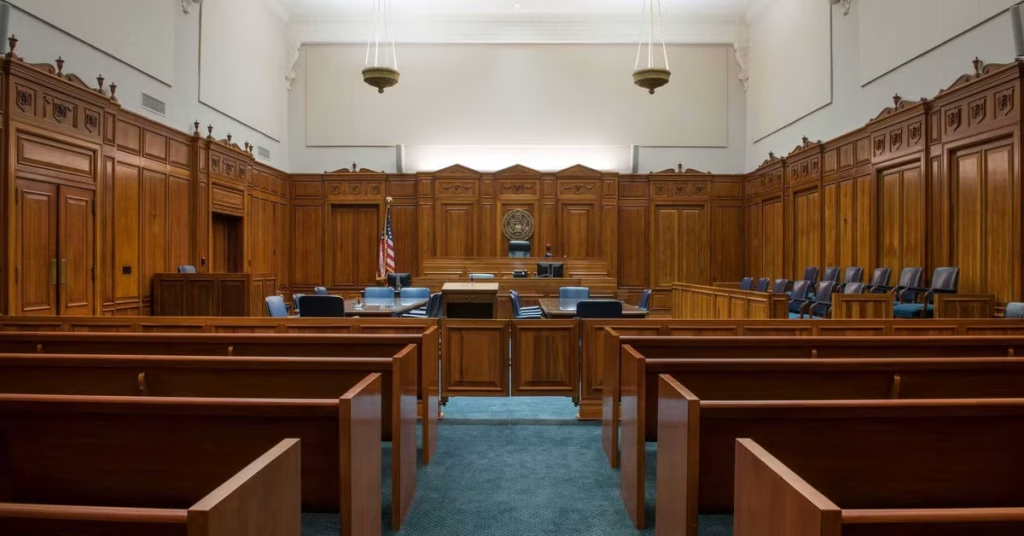
Many military veterans come home carrying invisible responsibilities. Combat stress, trauma, substance usage and mental health challenges can impair daily living long after service ends. If these problems result in legal challenges, the true source of the problem may not be addressed in a typical courtroom. That’s where Veterans Court comes in. The Veterans Court in Kansas City is taking a different course. It still holds people accountable for their acts, but it also is about treatment, recovery and long term success. It’s not just about retribution. The idea is to help veterans get back on their feet and move on. “Supporting the mission of Kansas City Specialty Courts is important to organizations like Beyond the Bench KC because lasting public safety begins with addressing the reasons behind criminal behavior.
More Than Just a Courtroom
The traditional courts focus primarily on the legal offense. Judges hear evidence, decide whether someone is guilty of a crime or innocent and impose penalties where necessary. Veterans Court looks at the big picture. The Court recognized that military service may have permanent repercussions. Some veterans experience post-traumatic stress, depression, anxiety or substance usage. Others have housing problems, lost jobs or family stress. These problems can lead to criminal activity. The Veterans Court tackles a key question: Why did this happen, and what can we do to stop it from happening again? It is this change of mind that makes all the difference.
A Team Approach That Is Just Different
One of the most unusual aspects of Veterans Court is the team-based methodology. Rather than going through the system alone, participants are supported by a group that may include:
- Judicial Officers Prosecutors
- Defense lawyers
- Providers of Treatment
- Experienced mentors
- Case managers
Everyone is working towards the same goal, enabling participants to achieve genuine progress. It’s like physical treatment after you’re hurt. It’s not only about the agony. The emphasis is on recuperation, strength and avoiding future setbacks.
Accountability Still Counts
Some people think Veterans Court is a means to get out of trouble. That’s not true. Participants are held to high standards. They go to therapy regularly, take drug tests, show up in court consistently and stick to comprehensive rehabilitation plans. Missed appointments or infractions may have repercussions. The difference is, it’s responsibility with backing. Traditional courts can finish after a sentence. Veterans Court remains involved in the healing process. That constant coaching can help people stay on track when life gets tough.
The Importance of Veteran Mentors
Here’s something that many people find shocking. Veterans Court often pairs participants with military mentors with similar military experience. That link can be powerful. A mentor knows military culture in ways others don’t. They know the challenges of deployment and transition, and the strain many veterans face when they leave the service. Sometimes, a chat with someone who has “been there” is more valuable than any lecture. These interactions are typically a critical element of the rehabilitation journey.
The Solution Is Treatment
Many veterans who join the judicial system have problems that punishment alone cannot cure. Veterans Court emphasizes therapeutic programs focusing on:
- Substance use disorder
- Mental health issues
- Trauma associated conditions
- Barriers to employment
- Housing insecurity
The court is monitoring developments closely. Participants are required to participate completely and improve with time. This helps cut down on re-offending and promote healthier lifestyles.
Better Communities Outcomes
And the benefits don’t just go to the individual participants. And when veterans get care and assistance, communities gain. Families get stronger. Employment rates increase. Repeat offenses tend to go down. More efficient use of public resources. That’s why Kansas City Specialty Courts have become a part of the local justice system. They understand that punishment by itself does not create enduring change. You know what. Most people want the same thing from the justice system: safer neighborhoods and fewer repeat offenders. Veterans Court works toward both aims simultaneously.
Kansas City Specialty Courts Advantage
Kansas City Specialty Courts focus on rehabilitation with an emphasis on accountability. For example, the attitude plays out in Veterans Court. The program respects military service, appreciates the specific obstacles veterans may experience, and offers structured opportunities for healing. This balanced approach offers a road forward for personal progress while also maintaining public safety. Because real justice is more than just reacting to a crime, Beyond the Bench KC helps get the word out about these efforts. It’s also about helping individuals to create a better future.
FAQs
1.What is Veterans Court? Veterans Court is a specialized court program.
Veterans Court is a specialized court program for qualifying military veterans charged with a crime. It involves accountability, treatment, mentoring and judicial supervision to address underlying issues that may lead to criminal behavior.
2.How is Veterans Court different from regular court?
The traditional court is primarily interested in the legal results and penalties. Veterans Court emphasizes accountability and recovery. Participants concentrate on meeting court requirements and receive therapy, mentorship and continuous support.
3.Who qualifies for the Veterans Court?
Depending on the situation and the jurisdiction. These may include the person’s military service history, kind of offense, criminal background and whether underlying conditions such as trauma or substance use contributed to the case.
4.Do participants still have to be responsible for their actions?
Yes. Veterans Court compels participants to follow tight regulations, attend treatment programs, appear regularly before the court, and accomplish recovery goals. Failure to comply can bring sanctions or other legal consequences.
5.Why are the mentors in the program experienced?
Veteran mentors can provide the peer support of someone who knows military life and the difficulty of transitioning to civilian life. Guidance can help keep participants motivated, engaged and focused on long-term success.

Oliver Smith is an experienced blogger at Grammar Globe, Oliver Smith, an expert in English grammar and a master of wit, brings language to life with his playful take on puns. Through his works, he weaves humor into the rules of grammar, making learning fun and engaging for readers of all ages. Discover language with a smile!”